

 Gonzalo
In the end, as it so often does, it came down to a single moment. A cross from the left. A run timed to perfection. A finish that owed everything to nerve and nothing to luck. Ferran Torres, introduced from the bench with the game still goalless and extra time ticking away, settled the 2026 FIFA World Cup final with the kind of goal that will be replayed on television screens for the next thirty years.
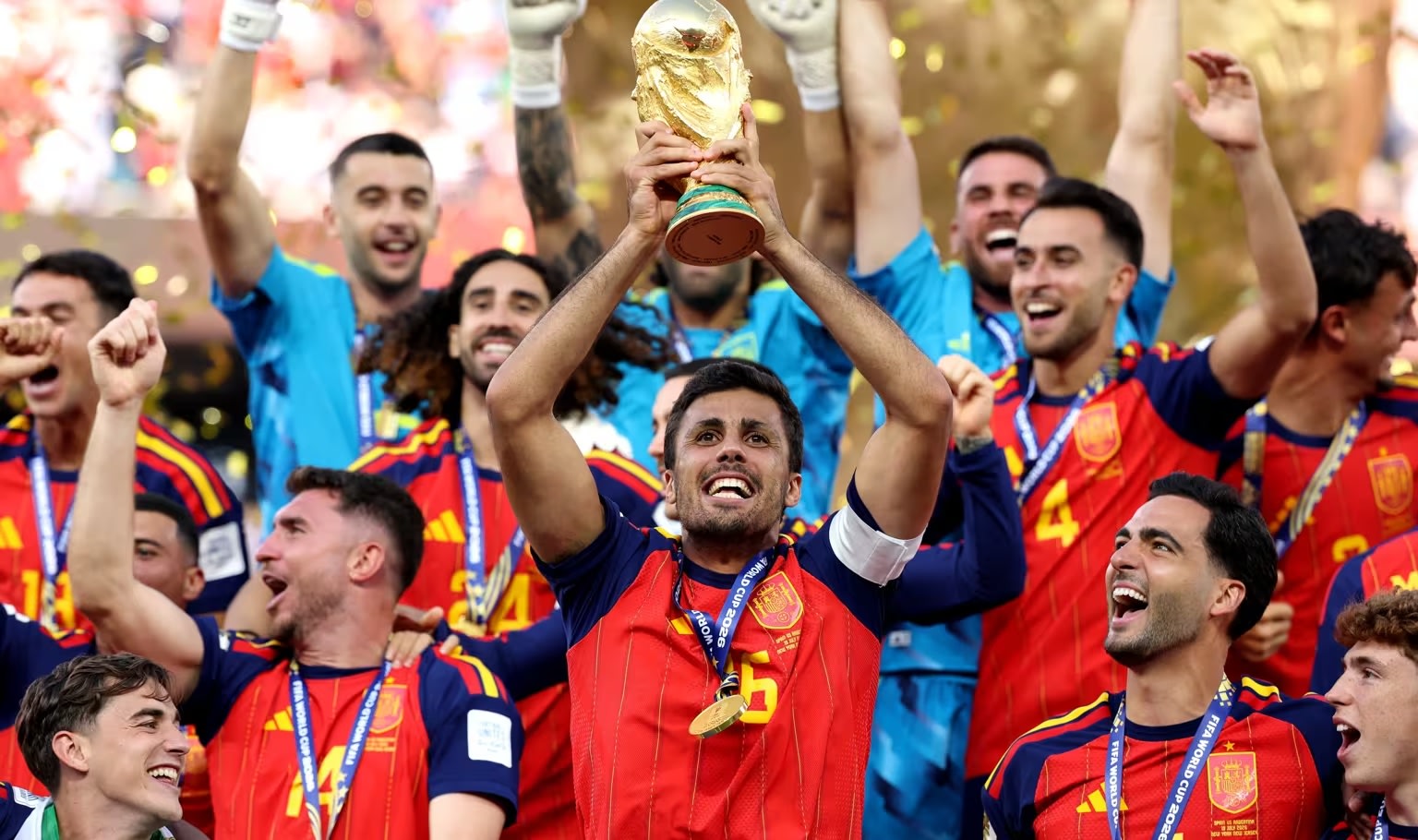
Spain are world champions. For the second time. And if the sixteen years between their two titles felt long from the outside, the manner of this triumph suggests the wait was entirely necessary. Because this is not the Spain of 2010, of Xavi and Iniesta and the tiki taka that enchanted a generation. This is something new. Something harder. Something, if you can believe it, even more difficult to play against.
One goal conceded. Eight matches. A World Cup won. The numbers belong in a history book. They already do.
A Final Played Almost Entirely In One Half
There is a particular kind of agony unique to watching a football match in which one team does everything right and still finds itself level at full time. Spain experienced that agony for 105 minutes last night, and the reason they did had a name. Emiliano Martínez.
The Argentina goalkeeper was, quite simply, extraordinary. Eleven saves in a World Cup final, a record that had never been reached before and may never be reached again given the defensive quality modern finals tend to produce. He stopped headers and volleys and close range efforts with equal authority, commanding his area with a presence that made his six-foot frame seem somehow larger than it actually is.
And yet the statistics behind his performance tell an uncomfortable story for Argentina. Their expected goals figure for the entire match was 0.20. They did not register a single shot on target. Not one. Martínez was exceptional, but he was exceptional largely in the sense that a man treading water is exceptional at keeping himself afloat. He was keeping his team in a game they had no right to still be playing at the 90-minute mark.
Spain, for their part, were everything you would expect from a team that had spent the previous seven matches dismantling opponents with quiet, methodical precision. They had 1.94 expected goals. Ten shots on target before the 82nd minute. They moved the ball with purpose and patience, probing for spaces that Argentina's increasingly desperate defence worked frantically to close.
The decisive moment, when it came, was not a piece of individual brilliance but a piece of collective stupidity from the opposition. Enzo Fernández, already on a booking, launched into a challenge on Pau Cubarsí that sent the teenager spinning into the turf. The second yellow card was inevitable. Ten men. Tired legs. Broken resistance. Thirty nine seconds into the second period of extra time, Nico Williams delivered the cross and Torres arrived at the near post to do what substitutes dream of doing and rarely get the chance to.
The aftermath was regrettable. Leandro Paredes lost whatever remained of his composure and threw himself at Spanish players in scenes that had no place at a World Cup final or indeed anywhere on a football pitch. FIFA will conduct their review. Bans will presumably follow. It was an ugly postscript to what had otherwise been a magnificent occasion and it deserves to be forgotten quickly.
The Manager Nobody Gave Enough Credit
Let us talk about Luis de la Fuente because the conversation about this Spain team will inevitably centre on the players and the football and the records and it will take somewhat longer for the broader public to recognise the extraordinary job their manager has done.
De la Fuente inherited a squad that had talent in abundance and a philosophy that needed reshaping. He was questioned throughout his early tenure. Selection decisions were dissected and dismissed. His methods were compared unfavourably to those of his predecessor. He kept working. He kept selecting the players he believed in. He kept building the defensive structure that everyone could see was becoming something special but that few could quite believe would hold up at tournament level under genuine pressure.
It held up. Rather magnificently.
What he has produced is a team without a hierarchy. There is no player at this Spain whose mood dictates the atmosphere in the dressing room, whose form or lack of it determines whether the group rises or falls. Rodri is exceptional but Rodri will tell you he is nothing without the eleven around him. Yamal is electrifying but Yamal tracked back and defended and worked and ran at this tournament in a way that the purely highlight reel version of him does not quite capture. This is a collective. A genuine one. Those are rarer than people think.
The unbeaten run now stands at 38 consecutive matches. They conceded one goal across eight World Cup games. Unai Simón went 650 consecutive minutes without conceding at this tournament, breaking a record that had endured for decades. They are the most defensively dominant team ever to win a World Cup. Not the most dominant team, full stop, because this Spain create and attack and press with real intent. But in terms of the balance between what they produce going forward and what they refuse to concede going back, there has been nothing like them.
On Rodri And The Art Of Invisibility
There is a type of footballer who only reveals himself to those who know exactly where to look. Who does his most important work in the half second before danger arrives rather than in the moment it presents itself. Who makes the game look slower and simpler than it is because he has already processed what everyone else is still catching up to.
Rodri is that type of footballer. He won the Golden Ball last night and the reaction in some quarters will be that a midfielder who scored no goals and provided no assists does not deserve the individual prize at a tournament this large. Those people are wrong and they know it. Without Rodri, Spain's backline faces twice as many problems. Without Rodri, their attacks build from a less secure foundation. Without Rodri, they are a very good team. With him, they are world champions.
The Full Honours
Golden Ball — Rodri (Spain)
The quiet engine of the greatest defensive tournament performance in World Cup history. He did not need to score. He needed to think faster than everyone else on the pitch. He did.
Golden Boot — Kylian Mbappe (France)
Ten goals. Four assists. A second consecutive Golden Boot, the first man in history to achieve the feat. France were eliminated in the semi-finals but Mbappe ensured this tournament had a leading scorer worthy of the stage. He is 27. He will be back. Opposing managers are already dreading it.
Top scorers: Mbappe 10, Messi 8, Bellingham 7, Haaland 7, Kane 6, Dembele 6.
Golden Glove — Unai Simón (Spain)
Seven clean sheets. A save percentage of 90.9. A new record for consecutive scoreless minutes. Eleven saves in the final. He has spent his career being considered the second option behind more celebrated names. He leaves New Jersey as the finest goalkeeper at this World Cup. There is no argument to be had.
Best Young Player — Pau Cubarsí (Spain)
Nineteen years old and already in possession of a European Championship winners medal and now a World Cup winners medal. He plays the game with a stillness that suggests he has been doing it at this level for a decade. He has not. He is just beginning. Football should be very excited about that.
FIFA Fair Play Award — Netherlands
Eight matches. Eight wins. One goal conceded.
Sport occasionally produces performances so complete, so thorough, so devoid of weakness that the only appropriate response is to simply sit with them for a while. To resist the urge to immediately contextualise and compare and place them within a broader narrative and instead just acknowledge what you have witnessed.
Spain at the 2026 World Cup were that kind of performance. Stretched across eight matches and thirty nine days and one hundred and four total games of football, they were the clearest, most convincing answer to the question of who the best international team in the world is.
Luis de la Fuente built something here that transcends tactics and tournament brackets. He built a way of playing, a way of thinking, a way of being a football team that produced a record no future side may ever match.
They are world champions. And they were magnificent.
PHOTO CREDIT: FIFA